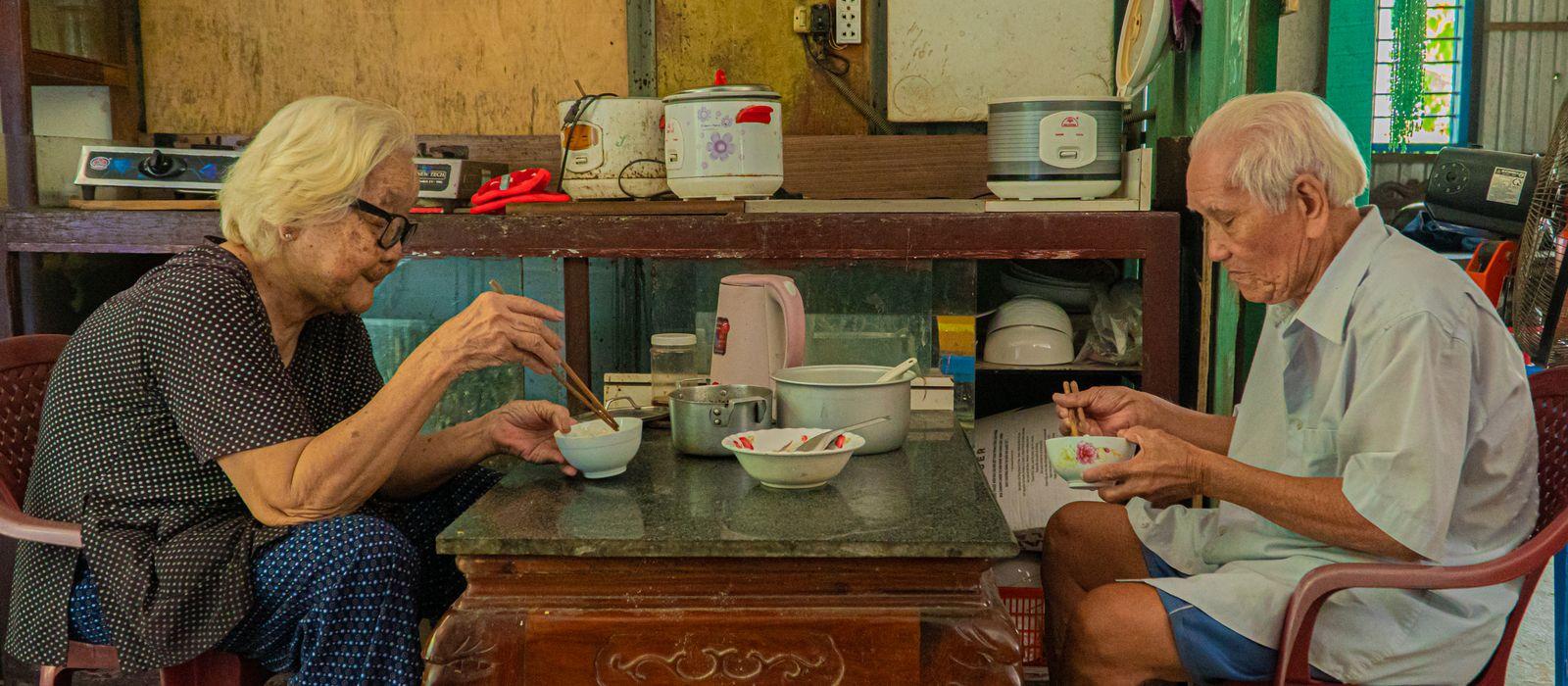
Let's get the real numbers on the table. The Residential Care Services Scheme in Guangdong (廣東院舍照顧服務計劃) started as a pilot in June 2014 and became a permanent scheme in January 2020. As of mid-2026 it covers 29 recognised service providers (RSPs) across Shenzhen, Guangzhou, Foshan, Dongguan, Zhaoqing, Huizhou, Zhongshan, Jiangmen and Zhuhai — and every one of those places is a subsidised place, applied for through the same Central Waiting List you'd use for a Hong Kong home. If your parent already sits on that list, this can be a genuinely faster route than waiting years for a place in Hong Kong.
What the scheme is, and who's eligible
The scheme is for Hong Kong elders who have been assessed through the Standardised Care Need Assessment and are on the Central Waiting List for a subsidised Care and Attention place — or, since the scheme expanded on 28 July 2023, a subsidised Nursing Home place. The age bar is 65, or 60–64 if the need for residential care is genuinely proven. There is no asset or income test for the scheme itself. Four groups are excluded: elders under a guardianship order under the Mental Health Ordinance (Cap. 136) with the Director of Social Welfare as public guardian; elders who need a SWD social worker to manage their CSSA or allowance money; elders who need regular psychiatric follow-up (dementia is exempt); and elders who need renal dialysis. Mainland rules add two more hoops: proof of no infectious disease (cholera, plague, AIDS, syphilis and similar) and no mental illness, plus at least one family member, guarantor or guardian who keeps in contact with the home. If you're at the very start of this process, our how to apply for a subsidised place guide walks through the assessment itself.
The 29 homes: who runs them and where
The scheme started with two Hong Kong charities: the Hong Kong Jockey Club Shenzhen Society for Rehabilitation Yee Hong Heights (香港賽馬會深圳復康會頤康院) — run by The Hong Kong Society for Rehabilitation since 2006, 321 places on Wutong Mountain in Yantian, Shenzhen — and the Hong Kong Jockey Club Helping Hand Zhaoqing Home (香港賽馬會伸手助人肇慶護老頤養院), run by Helping Hand since 2001 with 200-plus places and its own dementia wing (智樂軒). The big change came on 28 July 2023, when SWD opened the scheme to any Hong Kong operator with a good record in subsidised elderly care that runs a home in a Greater Bay Area city. That expansion brought in homes run by or partnered with Lok Sin Tong, Pok Oi Hospital, Sing Yan Nursing Home and a raft of other Hong Kong operators — and the list keeps growing (SWD accepted new provider applications until 30 April 2026, with results expected before the end of 2026).
- Shenzhen (7 homes): Yee Hong Heights (Yantian, 復康會, care-and-attention + nursing); Qianhai Life Happiness Home in Bao'an (前海人壽幸福之家, partnered with Beijing Elder Centre); Shenzhen Guangming Social Welfare Institute (光明社會福利院); Runhua Songhe (潤華松鶴頤養中心, partnered with Fuk On Home of Aged).
- Guangzhou (8 homes): Nansha District Elderly Home (南沙區養老院); Poly Tiandu Hexixi (保利天悅和熹會); the two Lok Sin Tong-partnered Chunxuanmao homes (廣州椿萱茂 and 廣州椿萱茂陳涌); Cliff Villa Care Home (祈福護老公寓).
- Foshan (6 homes): Changxiang Hui Elderly Home (佛山市暢享薈養老院, partnered with E.T. Investment); Hetai Aning in Shunde (順德區和泰安養中心, partnered with Jane's Home); Nanhai Taoyuan Welfare Centre (南海區桃苑福利中心, care-and-attention + nursing, with Sing Yan Nursing Home); Shunde Lunjiao Hospital (順德區倫教醫院) — the only nursing-only home in the scheme.
- Dongguan (2 homes): Hongmei Hospital Nursing Home (東莞市洪梅醫院護理院, partnered with Pok Oi Hospital); Donghua Sunshine City (東莞東華陽光城, with E.T. Investment).
- Zhaoqing (1 home): Helping Hand's home in Gaoyao (肇慶高要), 400,000 sq ft with a dedicated dementia zone — care-and-attention + nursing, and the scheme's most established charity home.
- Also: Heyuan Yiyang Centre in Zhuhai (和園頤養中心) and homes in Huizhou (2), Zhongshan (1) and Jiangmen (1). Note: Heyuan Yiyang stopped accepting new applications on 12 June 2026 — it's full and has a long waiting list.
What it actually costs
On fees, Guangdong scheme homes are cheaper than even Hong Kong's subsidised homes — which is saying something, since a Hong Kong subsidised place already runs at the centrally-set HK$1,656–2,060 a month (see our costs and fees guide). In a Guangdong scheme home there's no resident fee at all for the core package. To show what that package means in practice, Yee Hong Heights spells it out: four-bed shared rooms, three meals plus snacks (tube-feeding formula included), twice-weekly rehab, a monthly doctor visit with prescription medicines covered up to RMB 300 a month, four hospital outpatient escorts a year (up to four hours each, in Shenzhen or Hong Kong's New Territories), and a day a month of inpatient companionship in Shenzhen.
| The core package — nothing to pay | What you pay out of pocket |
|---|---|
| Shared-room accommodation, 3 meals plus snacks, 24-hour care and nursing | — |
| Personal care, individual care plan, 2 rehab sessions a week, laundry | — |
| Monthly doctor check-up and general consultation, plus basic medical care | Prescription medicines and procedures beyond the home's included amount |
| Escort and transport to designated hospitals and clinics, and inpatient companionship | Extra trips beyond the home's allowance — frequency varies, so ask each home |
| — | Consumables: nappies, wound dressings, emergency ambulance charges |
| — | Anything outside the package, and a pre-admission medical check if the home requires one |
Getting in, and the 6-month trial stay
Application runs through the same machinery as a Hong Kong subsidised place — nothing starts over. If your parent is already on the Central Waiting List, ask the responsible social worker to add a scheme home as the chosen home; if it has a vacancy, placement can be immediate, and SWD's own advice is to name one specific home rather than several to speed up matching. New applications go through a District Elderly Community Centre, Neighbourhood Elderly Centre, Medical Social Services Unit or Integrated Family Service Centre, followed by the Standardised Care Need Assessment. Elders already living in Guangdong can apply directly through the New Home Association (新家園協會) — 2671 1355 (HK), 0755 2563 1876 (Shenzhen), 020 8318 3983 (Guangzhou). Already in a subsidised Hong Kong home? Transfer is possible via a special application through the home's social worker. Then the safety net: since 1 October 2023 every admission includes a 6-month trial stay. During the trial the Central Waiting List application is marked inactive; if your parent leaves within six months, it reactivates at the original application date — no lost waiting time. Stay past six months and the application closes. You can even try a second home within the trial (special application), though the clock doesn't restart. The catch: this protection only applies to applications made from Hong Kong, not to elders who already live in Guangdong and apply via the New Home Association. For context on the Hong Kong queue you'd otherwise be sitting in, see our waiting time guide.
Medical care across the border
Every scheme home provides escort and transport to designated hospitals and clinics, plus a monthly visit from a registered medical practitioner for a check-up and general consultation — Yee Hong Heights, for example, includes prescription medicines up to RMB 300 a month. For everything beyond that, the 2024 Policy Address delivered a real subsidy: the Pilot Medical Subsidy Arrangement, run from 22 December 2025 for two years by China Taiping Life Insurance (Hong Kong). Scheme residents can claim back, on a reimbursement basis, the self-paid portion of medical expenses at any Greater Bay Area institution covered by the National Basic Medical Insurance — up to RMB 10,000 a year for outpatient care and RMB 30,000 a year for inpatient care. No double-dipping: if an expense was already covered by another HKSAR subsidy (the Elderly Health Care Voucher, or the Hospital Authority's GBA pilot scheme) or by private insurance, the subsidy only tops up what's left. Joining is free (hotline 800 961 589). Your parent keeps their Hong Kong ID, so eligibility for Hong Kong public hospitals stays intact — the realistic question is whether you'd bring them back for care, with New Territories hospitals the practical option.
Money and allowances while in Guangdong
Subsidies and allowances follow your parent across the border, but the rules are precise. A CSSA recipient aged 65+ who has drawn CSSA for at least a year can switch to the CSSA Elderly Persons Guangdong and Fujian Scheme (養老計劃): from 1 February 2026 the monthly miscellaneous payment is HK$2,760 (able-bodied or 50% disabled) or HK$3,705 (100% disabled or needing frequent care), plus an annual long-term case supplement of HK$2,715 (single) or HK$5,420 (two-person). Under this scheme there is no rent, special diet or transport allowance. Alternatively the Guangdong Scheme (廣東計劃) lets elders living in Guangdong draw the Old Age Allowance (HK$1,675 a month, 70+) or the Elderly Living Allowance (HK$4,345 a month, 65+, income- and asset-tested) — provided they've been Hong Kong residents for 7-plus years, spend at least 60 days a year in Guangdong, and hand back any public housing unit before leaving.
Getting there: travel times and visiting
- Shenzhen (7 homes): about 15 minutes to Futian and 20 to Shenzhen North on the high-speed rail from West Kowloon, then local travel — Yee Hong Heights in Yantian is roughly an hour door-to-door from most HK districts.
- Guangzhou (8 homes): West Kowloon to Guangzhou South is about 50 minutes on the high-speed rail, then 30–40 minutes into the city — allow around two hours door-to-door.
- Dongguan: roughly 1–1.5 hours by car or coach.
- Zhuhai: about 1.5–2 hours via the Hong Kong–Zhuhai–Macao Bridge.
- Huizhou: about 1.5–2 hours; Zhongshan and Foshan: about 2–2.5 hours; Jiangmen: about 2.5–3 hours.
- Zhaoqing: the far one — roughly 3–4 hours by coach or car. Only consider it if family genuinely lives nearby.
Frequently asked questions
Do Guangdong Scheme homes charge a monthly fee?
No resident fee for the core package — the government pays the home in full for board, lodging, nursing care, personal care and basic medical care. You do pay for consumables such as nappies and wound dressings, for emergency ambulance charges, for anything outside the standard package, and for a pre-admission medical check if the home requires one. That makes a scheme home cheaper than a Hong Kong subsidised place, which runs at the centrally-set HK$1,656–2,060 a month.
Is there an asset or income test for the Guangdong Scheme?
No — the scheme itself has no asset or income test. Eligibility is based on the Standardised Care Need Assessment and being on the Central Waiting List for a subsidised care-and-attention or nursing home place. The means tests only kick in if you also want income-tested benefits: the Elderly Living Allowance (HK$4,345 a month) has income and asset limits (single: monthly income under HK$10,900 and assets under HK$415,000 from 1 February 2026), and CSSA has its own assessment.
What happens to our Hong Kong waiting list place if we move over?
During the 6-month trial stay your Central Waiting List application is marked inactive; if your parent leaves a scheme home within the trial and returns to Hong Kong, the application reactivates at the original application date — no time lost. If they stay past six months, the application closes. After the trial, if circumstances change, SWD can arrange an Enhanced Bought Place Scheme (EBPS) place or a bought nursing home place on your return, through a special application. The trial protection only applies to applications made from Hong Kong — elders already living in Guangdong who apply via the New Home Association don't get the reactivation safety net.
How long do we wait for a place in a Guangdong scheme home?
Many scheme homes have vacancies, so placement can be immediate — SWD advises naming one specific home rather than several to speed up matching. But it's not universal: as of mid-2026, nine homes on SWD's list are flagged as near-full (uncertain waiting time), and Heyuan Yiyang in Zhuhai has suspended new applications entirely since 12 June 2026. The demand-and-supply picture changes constantly, so check the SWD page for the current 'nearly full' markers before choosing.